High-Volume SMT Assembly: Key Processes, Quality Control, and Production Planning
Introduction
High-volume surface-mount technology (SMT) assembly requires more than increasing machine speed or running a production line for longer hours. As production volume grows, small process variations can affect a larger number of boards, making process consistency, inspection, traceability, and production planning increasingly important.
For electronics OEMs, choosing an SMT manufacturing partner means understanding how the supplier controls solder paste printing, component placement, reflow soldering, inspection, and production changes.
This guide explains the key technical considerations in high-volume SMT assembly and outlines practical questions buyers can use when evaluating a manufacturing supplier.
What Is High-Volume SMT Assembly?
SMT assembly is a manufacturing process in which electronic components are mounted onto solder pads on a printed circuit board. Components are typically placed onto solder paste and then passed through a reflow soldering process to create electrical and mechanical connections.
High-volume SMT assembly refers to production at quantities that require repeatable manufacturing processes, coordinated material supply, efficient line scheduling, and consistent quality controls.
There is no single production-volume threshold that defines high-volume SMT for every product. The appropriate production setup depends on board complexity, component count, order frequency, changeover requirements, and the customer's quality expectations.
Five Key Technical Considerations in High-Volume SMT
1. Solder Paste Printing
Solder paste printing deposits a controlled amount of solder paste onto the PCB pads through a stencil.
Printing quality affects the subsequent placement and soldering stages. Insufficient paste, excessive paste, smearing, or misalignment can contribute to solder joint defects.
Important controls include:
- Selecting a stencil design suitable for the PCB pad geometry and component packages.
- Controlling solder paste storage, handling, and working time according to supplier requirements.
- Maintaining appropriate printer settings and alignment.
- Inspecting paste deposits when required by the product's risk and process-control plan.
- Monitoring recurring defects and correcting the underlying process cause.
Solder paste inspection (SPI) can provide information about paste volume, area, height, and position. Whether inline SPI is appropriate should be determined by the board design, production volume, and agreed quality requirements.
2. Component Placement Accuracy
Pick-and-place equipment positions surface-mount components on the solder paste deposits.
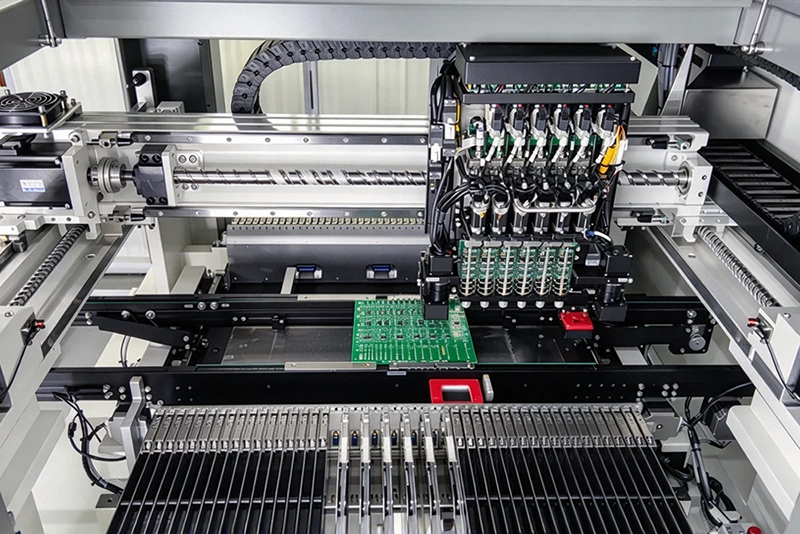
Placement performance depends on equipment capability, component package types, feeder condition, component presentation, PCB support, and the accuracy of the production data.
For fine-pitch components or compact designs, placement alignment and solder paste control become especially important.
Manufacturers should maintain appropriate machine setup procedures, feeder maintenance, component verification, and program control. When placement defects occur, the investigation should consider component orientation, feeder performance, vision recognition, board support, and upstream printing conditions.
Machine speed alone is not a sufficient measure of manufacturing capability. Buyers should also consider the range of components the supplier can handle and the quality requirements of the specific assembly.
3. Reflow Soldering
During reflow soldering, the PCB passes through controlled heating zones so that the solder paste melts and forms solder joints.
The reflow profile must suit the solder paste, PCB construction, component temperature limits, and thermal characteristics of the assembly.
Key considerations include:
- Verifying the profile against the product's thermal requirements.
- Reviewing the effect of large components and uneven thermal mass.
- Monitoring equipment condition and temperature control.
- Rechecking the profile after relevant product or process changes.
- Following the solder paste and component manufacturers' handling and processing recommendations.
Nitrogen-atmosphere reflow may be useful for certain assemblies, depending on soldering requirements and defect risks. It is not automatically necessary for every high-volume SMT project.
4. Inspection and Defect Analysis
Inspection methods should be selected according to the assembly design and the risks associated with potential defects.
Common methods include:
- Visual inspection: Checks visible assembly conditions and workmanship.
- Automated optical inspection (AOI): Uses imaging to identify visible component and soldering anomalies.
- X-ray inspection: Helps examine solder joints that cannot be fully assessed by visual methods, such as those beneath certain package types.
- Electrical or functional testing: Checks electrical behavior or confirms that the assembly performs according to the defined test requirements.
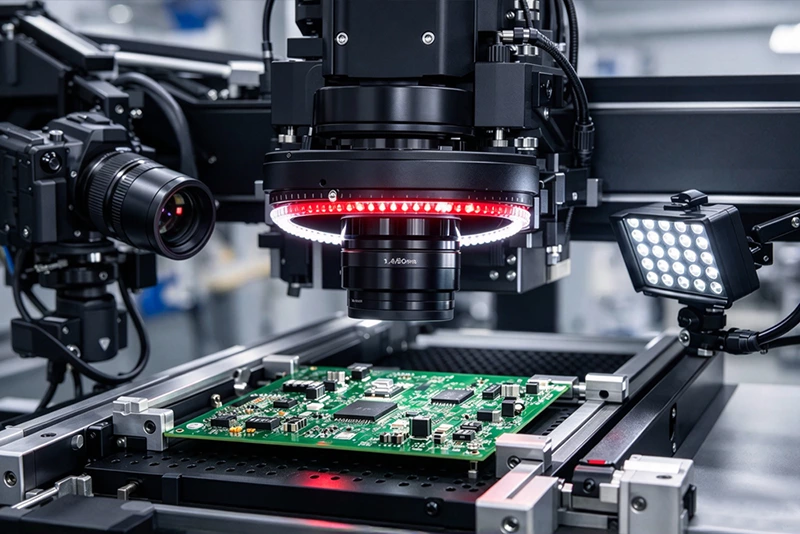
Inspection systems are most useful when their results feed into a corrective-action process. Repeated defects should trigger investigation and appropriate changes to the process, rather than being managed only through downstream rework.
5. Component Traceability and Material Control
Component mix-ups, incorrect polarity, and unapproved substitutions can create costly production issues.
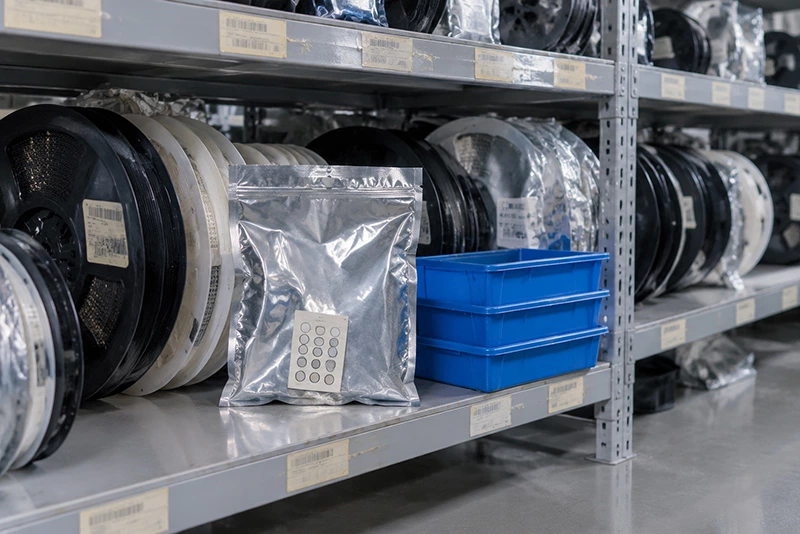
A suitable material-control process should verify component identity, part numbers, quantities, and relevant lot information. Depending on customer requirements, records may connect component lots and production batches with inspection and test results.
Traceability requirements should be defined before production begins. Some projects may need batch-level records, while others may require more detailed serial-number-level tracking.
The required level should match the product's risk, service environment, and customer or regulatory obligations.
Why Process Control Matters as Production Volume Grows
Higher production volume increases the impact of recurring defects. A small defect rate can still result in a meaningful number of affected boards when production quantities are large.
A structured process-control approach helps manufacturers identify variation, investigate repeated defects, and verify whether corrective actions are effective.
Useful practices include:
- Standardized setup and changeover procedures.
- Controlled versions of manufacturing programs and process parameters.
- Appropriate in-process inspection.
- Defect tracking by product, production batch, and process stage.
- Preventive maintenance for production equipment.
- Clear procedures for handling nonconforming material.
Statistical process control may be appropriate when sufficient data is available and the process characteristics can be meaningfully monitored. The selected metrics and control limits should reflect the product and manufacturing process rather than using one target for every assembly.
Typical High-Volume SMT Production Workflow
Step 1: Design and manufacturability review
Review the PCB design, component packages, BOM, assembly drawings, and testing requirements. Identify potential manufacturing risks before production starts.
Step 2: Material verification
Confirm component specifications, availability, approved alternatives, and handling requirements for moisture-sensitive or otherwise controlled components.
Step 3: Solder paste printing
Apply solder paste using the approved stencil and process settings. Inspect the deposits according to the agreed control plan.
Step 4: Component placement
Load and verify components, execute the approved placement program, and monitor the assembly process for anomalies.
Step 5: Reflow soldering
Use a profile appropriate for the solder paste, components, and PCB assembly. Verify the process when the product or manufacturing conditions change.
Step 6: Inspection and corrective action
Use the agreed inspection methods to identify defects. Investigate recurring issues and document corrective actions where required.
Step 7: Electrical and functional testing
Perform the tests specified for the product. The test scope may vary by design and customer requirements.
Step 8: Final inspection and release
Verify the required records, packaging, labeling, and acceptance criteria before shipment.
How to Evaluate an SMT Manufacturing Supplier
When sourcing high-volume SMT assembly, buyers should evaluate the complete manufacturing process rather than relying on a single equipment specification.
Ask the supplier:
- What component packages and PCB designs can the production lines support?
- Which inspection methods are available, and which are included in the quotation?
- How are solder paste, placement, and reflow processes controlled?
- How are component identity and production changes verified?
- What traceability and quality records can be provided?
- How are defects investigated and corrective actions verified?
- How are production capacity, material lead times, and delivery schedules managed?
The answers should be supported by the supplier's actual equipment, documented processes, and project-specific requirements.
TECOO's SMT and PCBA Manufacturing Capabilities
TECOO provides electronics manufacturing services for PCBA projects, including SMT assembly, through-hole processes, inspection, and functional testing arrangements based on project requirements.
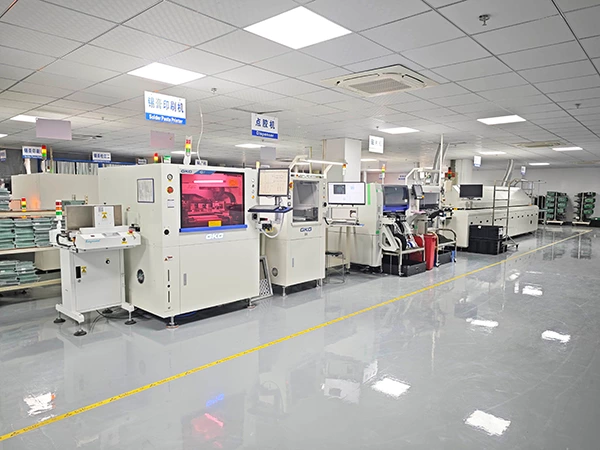
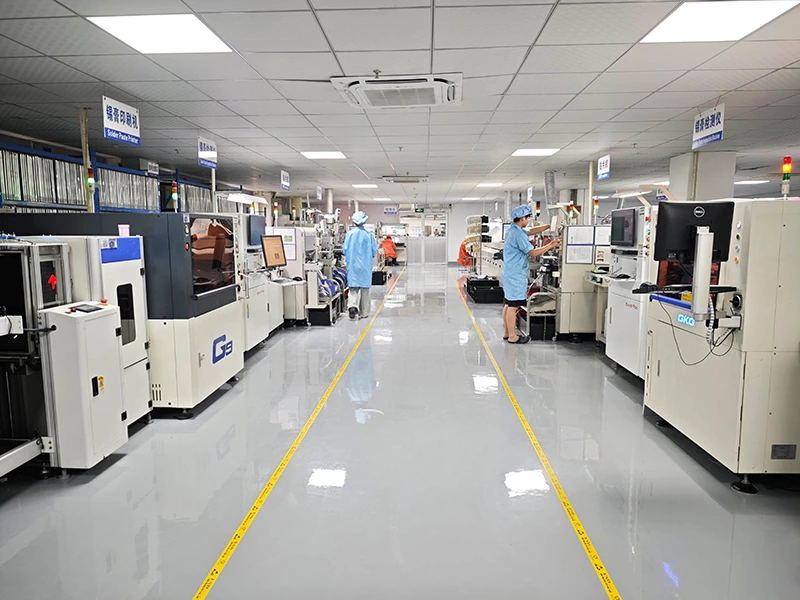
TECOO has eight production lines and a stated placement capacity of 48.2 million component placements per month. This figure describes component-placement capacity; it should not be interpreted as the number of finished PCB assemblies produced monthly. Actual output depends on component count per board, product mix, changeovers, testing requirements, and production scheduling.
For an accurate assessment, customers should provide their PCB files, BOM, assembly drawings, estimated order quantities, inspection criteria, and testing requirements.
Frequently Asked Questions
1. What determines the capacity required for high-volume SMT assembly?
Capacity depends on component placements per board, board complexity, line configuration, changeovers, production hours, material availability, and downstream inspection or testing requirements.
2. Is SPI necessary for every SMT assembly?
Not necessarily. SPI can be valuable for controlling solder paste printing, especially where board complexity or process risk justifies it. The inspection plan should be agreed upon for the specific product.
3. Is X-ray inspection required for every PCBA?
No. X-ray is particularly useful for inspecting certain hidden solder joints and package types. Its use should be based on the assembly design and quality requirements.
4. What information should I provide when requesting an SMT quotation?
Provide the BOM, Gerber files, assembly drawings, component placement data where available, expected quantities, testing requirements, and target delivery schedule.
Conclusion
High-volume SMT assembly depends on coordinated control of solder paste printing, component placement, reflow soldering, inspection, material handling, and production planning.
For electronics buyers, understanding these processes makes it easier to compare suppliers and define realistic manufacturing requirements. A clear process and quality plan helps establish consistent production as order volumes grow.
Contact TECOO to discuss your SMT assembly and PCBA manufacturing requirements.