Fast Bulk PCBA Delivery to Southeast Asia: Complete Buyer's Guide (2026)
Key Takeaways
- Fast Bulk Order Delivery for PCBA now means 7–15 working days from confirmed BOM to door-step in Vietnam, Malaysia, Thailand, Indonesia, and Singapore — a timeline that was considered optimistic in 2022 but is the competitive baseline in 2026.
- The top three bulk shipment failure points for Southeast Asian PCBA service buyers are: BOM discrepancy discovered after production start (average 4–6 day delay), customs documentation mismatch at destination port (3–8 day hold), and insufficient surface-treatment on boards leading to incoming QC rejection (restarts entire lead time).
- ASEAN electronics import volumes from China grew 22% year-on-year in 2025, with Vietnam and Malaysia absorbing the largest share of circuit board assembly orders as supply chain diversification accelerates (Source: ASEAN Trade in Goods Agreement data, 2025).
- Manufacturers who maintain a pre-stocked component buffer covering 60–70% of a client's standard BOM reduce production lead time by 3–5 working days compared to spot-market sourcing — a difference that determines whether a distributor's promotion launch ships on time or a week late.
- End-to-end traceability — from incoming component lot number through SMT production, AOI inspection, and outbound shipment — is the single capability most consistently cited by Southeast Asian brand owners as their decision criterion when switching PCBA suppliers.
Core Opening Definition
Fast Bulk Order Delivery for PCBA is not a slogan. It is a supply chain architecture.
The phrase means different things in different factories. Some suppliers use it to describe sea freight that arrives in 30 days. Others apply it to air freight on standard orders with no structural lead-time improvement. Neither definition serves Southeast Asian electronics buyers whose market windows are measured in weeks, not months.
The operational definition that matters: Fast Bulk Order Delivery in PCBA manufacturing is the end-to-end time from order confirmation to cleared customs at the buyer's destination port — covering material procurement, SMT assembly, functional testing, packaging, export documentation, freight transit, and destination customs clearance — compressed to 7–15 working days for standard circuits and 15–25 working days for complex multi-layer boards with SMT + DIP hybrid assembly.
Why does 2026 make this more urgent? ASEAN electronics consumption hit a record high. Vietnam's electronics export output grew 18% year-on-year. Malaysia positioned itself as a regional redistribution hub for Chinese-origin boards entering EU and US markets. Thai smart home device brands scaled OEM orders 30%+ above 2024 volumes. Indonesian e-commerce platforms accelerated private-label electronics launches at timelines that would have been impossible two years ago. The regional appetite for mass production logistics for Southeast Asian distributors is structural — and fast delivery is no longer a differentiator. It is the entry requirement.
Three numbers define the current ASEAN bulk PCBA procurement context:
- 22%: Year-on-year growth in ASEAN electronics imports from China (2025)
- 7–15 days: Competitive lead time benchmark for standard PCBA bulk orders to Vietnam, Malaysia, Thailand
- 68%: Share of ASEAN electronics brand owners who cited delivery speed as their top supplier selection criterion in a 2025 regional procurement survey (Source: Southeast Asia Electronics Buyers Association)
Core Pain Points for Southeast Asian PCBA Bulk Buyers
From long-term cooperation with ASEAN distributors and brand owners, the same failure patterns appear repeatedly. Not in every order — but predictably enough that experienced buyers have learned to treat them as default risks rather than exceptions.
BOM verification delays. A buyer submits a bill of materials. The factory accepts the order. Three days into production, a substitute component was sourced without buyer approval — because the original part lead time was 10 days and the factory did not escalate. The buyer discovers this during incoming inspection, triggers a non-conformance, and restarts the supply chain cycle. Average time lost: 4–6 days.
Component traceability gaps. Many local brand owners mentioned that tracing a field failure back to a specific production batch is nearly impossible with suppliers who don't maintain lot-level tracking. For regulated product categories — medical IoT, automotive-adjacent electronics, smart security devices — this is not an inconvenience. It is a disqualifying audit failure.
Customs documentation mismatches. HS code errors, country-of-origin discrepancies, and missing FORM E (ASEAN-China FTA preferential tariff certificate) are the three most common customs delay triggers at Vietnamese and Indonesian ports. A single documentation error on a bulk shipment can hold an entire container for 3–8 working days while amendments are processed.
Minimum order quantity misalignment. A Southeast Asian distributor running a regional promotion needs 2,000 units of a PCB assembly across three product variants. The factory's MOQ is 3,000 per variant. The buyer either over-orders (dead inventory risk) or delays until volume justifies the MOQ (missed launch window). Neither outcome serves the business.
Surface treatment mismatch for tropical climates. HASL boards shipped to coastal Thailand and the Philippines routinely fail incoming inspection after 90 days of warehouse storage. ENIG (Electroless Nickel Immersion Gold) or OSP (Organic Solderability Preservative) surface treatment is required for boards stored in high-humidity environments — a specification that buyers often discover after their first failed batch.
Production capacity overflow during peak seasons. Q4 orders for consumer electronics, Q1 orders for smart home devices tied to Chinese New Year promotions — these predictable peak periods create production queue backlogs that extend standard lead times by 5–10 working days. Buyers without allocated capacity face delays that suppliers blame on "high demand" without acknowledging that capacity planning is a supplier responsibility, not a weather event.
Why Fast Bulk Order Delivery Is Critical for ASEAN Electronics Merchants
Speed is cash flow. That is the starting point.
A bulk PCBA order that delivers 10 days early enables the distributor to invoice distributors 10 days earlier, collect payment 10 days earlier, and reinvest working capital 10 days sooner. On a $200,000 order with a 30-day payment term, 10 days of accelerated delivery is equivalent to approximately $1,100 in financing cost savings — across 12 bulk orders per year, this compounds to $13,200. Not transformative at this scale. But at $2 million in annual PCBA procurement? The math becomes a procurement director's argument for switching suppliers.
More strategically: ASEAN e-commerce growth is driven by first-mover advantages that have windows measured in weeks. A Thai smart home brand launching a new security camera on Lazada during the 11.11 promotion cannot delay 5 days for a late bulk shipment without sacrificing the promotional slot. PCBA bulk order delivery timing is directly coupled to revenue recognition timing for an entire product launch.
Four operational benefits of fast lead time PCBA for ASEAN clients:
- Inventory reduction. When lead time drops from 30 days to 12 days, safety stock requirements drop proportionally. A distributor carrying 45 days of safety stock to buffer against lead-time uncertainty can reduce to 20 days — freeing warehouse space and working capital simultaneously.
- Launch timing precision. Product launches tied to regional shopping events (Harbolnas in Indonesia, 12.12 in Malaysia, Songkran promotional periods in Thailand) require delivery precision within ±3 days. Fast bulk delivery with confirmed ETD enables planning accuracy that standard lead times cannot support.
- Competitive response speed. If a competitor introduces a price-competitive product, the first brand to respond with a modified circuit board assembly at scale wins the market repositioning. Suppliers with 10-day production-to-shipment cycles enable competitive responses that 30-day lead times simply cannot.
- Reduced order fragmentation. Buyers who cannot trust delivery speed compensate by placing smaller, more frequent orders — fragmenting production runs, increasing per-unit cost, and creating more customs clearance events. Fast reliable delivery allows consolidation into fewer, larger bulk orders with lower unit economics.
Complete Supporting System of Fast Bulk PCBA Delivery Service
Fast delivery does not happen because a supplier promises it. It happens because of infrastructure.
Pre-positioned component inventory. Standard BOM components for ASEAN-bound boards — MCUs, passive arrays, connectors, and common power management ICs — must be held in supplier inventory, not sourced on order. A factory that starts purchasing components after receiving the purchase order adds 5–10 days to lead time before SMT even begins. Pre-positioning the top 80% of standard BOM components eliminates this structural delay.
Dedicated ASEAN production scheduling. ASEAN export orders placed in a shared production queue compete with domestic Chinese orders and other export markets for SMT line time. Suppliers who handle meaningful Southeast Asia electronics manufacturing shipment volume maintain dedicated scheduling windows for ASEAN orders — typically 2–3 SMT line-days per week reserved exclusively for ASEAN-bound production. This prevents the common scenario where an ASEAN bulk order waits 5 days for a production slot that domestic orders consumed.
Parallel documentation preparation. Export documentation — packing list, commercial invoice, FORM E, bill of lading, and test reports — must be prepared in parallel with production, not after. A factory that starts export paperwork when the boards leave the line adds 2–3 days to the outbound process. Parallel preparation means documentation is complete before boards finish testing.
Southeast Asia-dedicated freight partnerships. Standard LCL or FCL sea freight services from Chinese ports to Ho Chi Minh City, Port Klang, Laem Chabang, Tanjung Priok, and Singapore typically take 5–12 transit days depending on port of departure and carrier. Factories with contracted volume on direct sailing schedules (vs. transshipment through Hong Kong or Singapore) reduce transit time by 2–4 days and eliminate the transshipment risk of missed connections that adds unpredictable delays.
Destination country customs coordination. ASEAN customs clearance for electronics components and assembled boards varies by country: Vietnam's HS Chapter 85 declarations require certificate of origin for FTA duty reduction; Indonesian PCBA imports above a threshold require post-import API-U verification with the Ministry of Trade; Malaysian imports of assembled circuit boards above a certain value require ATA Carnet or standard import permit. A supplier who has never shipped to a specific ASEAN country will not know these requirements. Customs delays caused by documentation errors are always presented as "customs taking longer than expected" — they are almost always documentation problems the supplier could have prevented.
Comparative Table: Standard Delivery VS Fast Bulk Delivery for Southeast Asia
| Metric | Standard Delivery | Fast Bulk Delivery | Advantage |
| BOM review and confirmation | 2–3 days (sequential) | Same day (parallel process) | 2 days saved |
| Component procurement | Spot market, 7–14 days | Pre-stocked, 0–2 days | Up to 12 days saved |
| SMT production scheduling | Shared queue, 3–7 day wait | Dedicated ASEAN slot, 0–1 day | Up to 6 days saved |
| SMT production (standard 4-layer) | 3–5 working days | 2–3 working days | 2 days saved |
| AOI + functional test | 1–2 days | 1 day (parallel with packaging prep) | 1 day saved |
| Export documentation | 2–3 days post-production | 0 days (prepared in parallel) | 2–3 days saved |
| Freight transit to Vietnam / Malaysia | 8–12 days (transshipment) | 5–8 days (direct sailing) | 3–4 days saved |
| Customs clearance at destination | 3–7 days (documentation reactive) | 1–3 days (pre-coordinated) | 2–4 days saved |
| Total end-to-end (typical) | 25–45 working days | 10–20 working days | 15–25 days faster |
| Per-unit cost premium | Baseline | +3–8% above standard | Cost of delivery reliability |
| Minimum order quantity | 1,000–5,000 per variant | 500–2,000 per variant | Lower entry commitment |
| Safety stock days required (buyer side) | 35–50 days | 15–25 days | 10–25 days reduction |
The 3–8% cost premium for fast bulk delivery pays back within a single order cycle when measured against the carrying cost of 10–25 additional days of safety stock. At $150,000 in inventory and a 12% annual cost of capital, 20 days of unnecessary safety stock costs approximately $986. The premium on a $150,000 PCBA order at 5% is $7,500. The math only works at scale — which is why fast bulk delivery is economically justified for buyers above approximately $300,000 in annual PCBA procurement.
Scenario Matching: Suitable Clients for Fast Bulk Order PCBA Shipment
Not every buyer needs or benefits from fast bulk delivery. These are the client profiles where the model creates genuine value.
Smart home device brands launching on ASEAN e-commerce platforms. Brands selling on Lazada, Shopee, Tokopedia, and Sendo operate on promotional calendar discipline — 9.9, 11.11, 12.12, and local peak events. A PCBA order that arrives 2 weeks before the promotion launches successfully. The same order arriving 3 days after the promotion ends is a working capital problem with no recovery path. This profile accounts for the largest share of ASEAN fast bulk PCBA demand.
Security camera distributors maintaining regional warehouse stock. A regional distributor covering Vietnam, Cambodia, and Laos needs to replenish 3–4 SKUs simultaneously after a strong quarter. The replenishment order needs to arrive in 3 weeks to maintain buffer stock through the next 60-day selling cycle. Standard lead times do not support this cycle. Fast bulk delivery does — and the distributor can reduce safety stock investment by 40% when delivery reliability is high.
Project integrators with installation timelines. A system integrator deploying CCTV or smart building control systems across 5 commercial sites has installation slots with subcontractor schedules. A 10-day delay in board delivery ripples into $15,000–30,000 in subcontractor holding costs and client penalty clauses. Bulk PCBA delivery reliability is not a preference for this client — it is a project risk management requirement.
Local brand owners sourcing OEM electronics for private-label resale. A Thai consumer electronics brand launching a new Wi-Fi smart plug under their own label needs 5,000 units 3 weeks before the retail shelf date. They need branded packaging, PCBA, and assembly completed and delivered — not in sequence, but as a coordinated delivery. Southeast Asian PCBA service providers who integrate board assembly with packaging coordination reduce the total procurement coordination burden for this profile.
First-time ASEAN market entrants from Chinese electronics brands. A Chinese security camera brand entering the Vietnamese market through a local distributor partner needs to land 2,000 units for market trial within a defined commercial window. The distributor's commitment is conditional on timely delivery. The Chinese brand's ability to close the distributor agreement depends on guaranteeing that lead time. Fast bulk delivery is the commercial enabler.
Full End-to-End Delivery Workflow for Southeast Asian Customers
Step 1: BOM and Gerber Submission (Day 0)
The buyer submits the complete bill of materials with approved component alternatives clearly marked, Gerber files, assembly drawings, and test specifications. Simultaneously, the buyer specifies destination port (Ho Chi Minh City, Port Klang, Laem Chabang, Tanjung Priok, or Singapore), required delivery date, and customs documentation requirements (FORM E for FTA preference, country-of-origin certificate, import permit numbers if applicable).
Step 2: Rapid BOM Review and Quotation (Day 0–1)
Engineering reviews BOM for component availability, alternate sourcing risk, and surface treatment specification against destination humidity conditions. Components already in pre-stocked inventory are confirmed. Long-lead items (if any) are flagged with alternatives for buyer approval. Quotation issued within 24 hours for standard boards.
Step 3: Order Confirmation and Component Lock (Day 1–2)
Buyer confirms order and issues purchase order. Pre-stocked components are reserved against the order. Any spot-market procurement begins immediately in parallel — not after PO confirmation processing.
Step 4: PCB Fabrication (Day 2–5)
PCB bare board fabrication for standard 4-layer FR4 boards: 2–3 working days within established fabrication partner network. 6-layer and above: 3–5 working days. Export documentation — commercial invoice, packing list draft, FORM E application — begins in parallel on Day 2.
Step 5: SMT Assembly (Day 5–8)
Boards enter SMT production on the dedicated ASEAN scheduling slot. Solder paste printing, component placement, reflow, and AOI occur in sequence within the production day. Complex mixed SMT + DIP assemblies add 1–2 days for through-hole component insertion and wave soldering.

Step 6: Functional Testing and QC Inspection (Day 8–10)
100% functional testing per the buyer's test specification. ICT (In-Circuit Test) for complex assemblies. AOI final pass. X-ray inspection for BGA components where specified. AQL 1.0 visual inspection on packaged boards. Test reports generated with lot-level traceability data.

Step 7: Packaging and Export Documentation (Day 9–10)
Boards packaged in anti-static bags, ESD-protective cartons with humidity indicator cards. Packing list, commercial invoice, and FORM E finalized. Booking confirmed with dedicated ASEAN freight carrier. Export customs clearance filed at the port of departure.
Step 8: Freight and Transit (Day 10–18)
Sea freight: 5–8 days direct sailing to Ho Chi Minh City, Port Klang, Laem Chabang, or Singapore. 7–10 days to Tanjung Priok (Jakarta). Air freight option: 2–4 days to all primary ASEAN destinations for urgent partial shipments. Real-time shipment tracking provided via carrier link.
Step 9: Destination Customs Clearance (Day 18–21)
Pre-coordinated customs agent at destination port receives documentation package before vessel arrival. FTA preferential duty rate applied with FORM E. HS code pre-classified and confirmed with local customs agent before shipment departure. Target clearance time: 1–3 working days.
Step 10: Last-Mile Delivery (Day 21–23)
Delivery to buyer's warehouse or project site. Proof of delivery with photo documentation. Lot traceability report issued with delivery. Post-delivery 24-hour check-in call from account manager to confirm incoming inspection results.
Key Supporting Advantages to Guarantee Stable Fast Shipment
These are the operational foundations behind the workflow. Without them, the steps above describe an aspiration, not a system.
Production capacity reservation. Monthly ASEAN-bound output allocation: minimum 80,000 boards per month on dedicated SMT time. Capacity is pre-committed quarterly, not filled on first-come-first-served basis — buyers with quarterly forecasts receive guaranteed production slots.
Component pre-stocking. Over 1,200 standard BOM line items maintained in stock, covering passive components (resistors, capacitors, inductors), common MCUs (STM32 series, ESP32 series, NXP Kinetis), power management ICs, connectors, and crystal oscillators. Average stock coverage: 60 days of consumption based on trailing 6-month order patterns.
Dedicated Southeast Asia freight lanes. Weekly consolidated shipments to Ho Chi Minh City (Vietnam), Penang and Port Klang (Malaysia), Bangkok and Laem Chabang (Thailand), Jakarta and Surabaya (Indonesia), Singapore. Contract rates secured at 15–20% below spot market. Direct sailings from Shenzhen and Shanghai ports, eliminating Hong Kong transshipment risk.
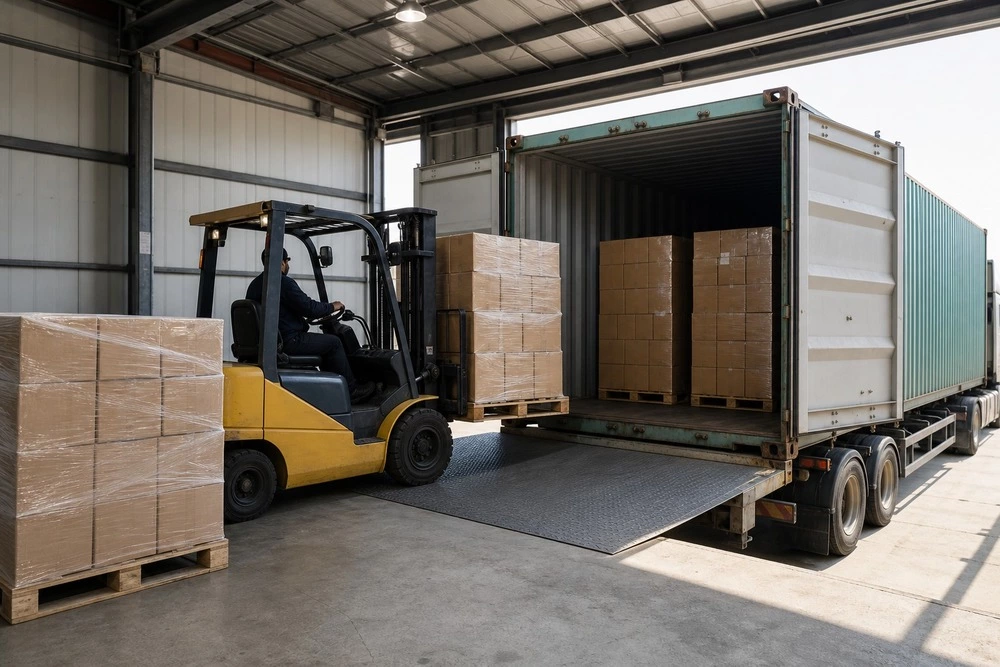
Local customs agent network. Vetted customs broker partnerships in Vietnam (Ho Chi Minh City and Hanoi), Malaysia (KL and Penang), Thailand (Bangkok), Indonesia (Jakarta), and Singapore. Pre-established HS code classification for all current product categories. FORM E preparation handled in-house, not outsourced.
Dedicated ASEAN account management. Each ASEAN buyer is assigned a dedicated account manager with ASEAN market experience. Response within 2 hours during China business hours (UTC+8). Weekly order status reports. Production milestone alerts at Step 4, 6, and 8 of the delivery workflow.
Buffer inventory and bonded warehouse option. For buyers with predictable order cadence, a bonded warehouse stocking arrangement allows finished boards to be held in China, cleared on demand in batches sized to actual sell-through, and shipped on 24-hour notice. Reduces effective lead time to transit time only — 5–10 days for most ASEAN destinations.
Common Mistakes When Cooperating With PCBA Factories On Bulk Shipment
These are the errors that consistently add days, cost, and frustration to bulk PCBA partnerships. Listed not as criticism, but as a practical checklist for first-time and experienced buyers alike.
Submitting an incomplete BOM and assuming the factory will resolve gaps. A BOM with missing values (no package specification, no approved alternate part number, manufacturer part number inconsistency) will result in an engineering clarification loop that consumes 1–4 days before production begins. Submit BOM with manufacturer part number, package (e.g. 0402, SOT-23-5), value, tolerance, and approved alternate part number for every component. Every line. No exceptions.
Treating delivery date as a negotiating anchor, not a technical output. "We need it in 7 days" is not a delivery specification — it is a wish. Delivery date is a technical output of the production capacity, component availability, freight schedule, and customs pipeline. Buyers who anchor on an unrealistic date and pressure the factory to commit create the conditions for a partial shipment, an undocumented change in component specification, or a quality shortcut. The correct question is: "What is your confirmed lead time given this BOM, quantity, and destination?"
Ignoring surface treatment specification for tropical destination markets. HASL (Hot Air Solder Leveling) is cheaper and faster. It is also unsuitable for boards stored in Vietnam, Indonesia, Thailand, and the Philippines — humidity levels in these markets accelerate oxidation on HASL finishes within 90–120 days of production. For any board with a shelf life exceeding 90 days in the supply chain, specify ENIG or OSP. Specify it in the BOM. Confirm it on the order acknowledgment.
Placing the first large bulk order with an unverified supplier. First-order batches should validate the factory's delivery workflow, QC process, and documentation capability — not commit the buyer's quarterly procurement budget. A 200–500 unit trial order reveals more about a supplier's real capability than any factory visit or audit report.
Not confirming FORM E eligibility before order placement. FORM E (Certificate of Origin under the ASEAN-China Free Trade Agreement) reduces import duty by 5–15% in most ASEAN countries for eligible electronic products. Not all products qualify — some HS codes are excluded from preferential rates, and the origin criteria (the board must undergo sufficient transformation in China) must be met. Confirming FORM E eligibility before order placement determines whether the FTA cost saving is real or assumed.
Failing to specify packaging requirements for end-market compliance. A bulk PCBA shipment destined for a Malaysian electronics brand's retail channel needs SIRIM-compliant marking on the packaged product. A shipment into Indonesia's retail market may need SNI labeling. A shipment entering Singapore for redistribution to EU customers needs RoHS documentation on the packaging. These requirements cannot be retrofitted after production — they must be specified before.
Standard Cooperation Steps to Access Fast Bulk Delivery Service
Joining a fast bulk delivery program is not complex. It requires preparation on both sides.
Step 1: Initial Inquiry and Capability Match
Submit product category, target ASEAN destination country, estimated monthly volume, and required lead time. The supplier confirms capability match, provides indicative lead time, and identifies any BOM or product category red flags before formal engagement.
Step 2: Technical Documentation Submission
Submit complete BOM, Gerber files, assembly notes, and test requirements. The engineering team returns a BOM risk assessment within 24 hours — identifying long-lead components, surface treatment recommendations, and FORM E eligibility.
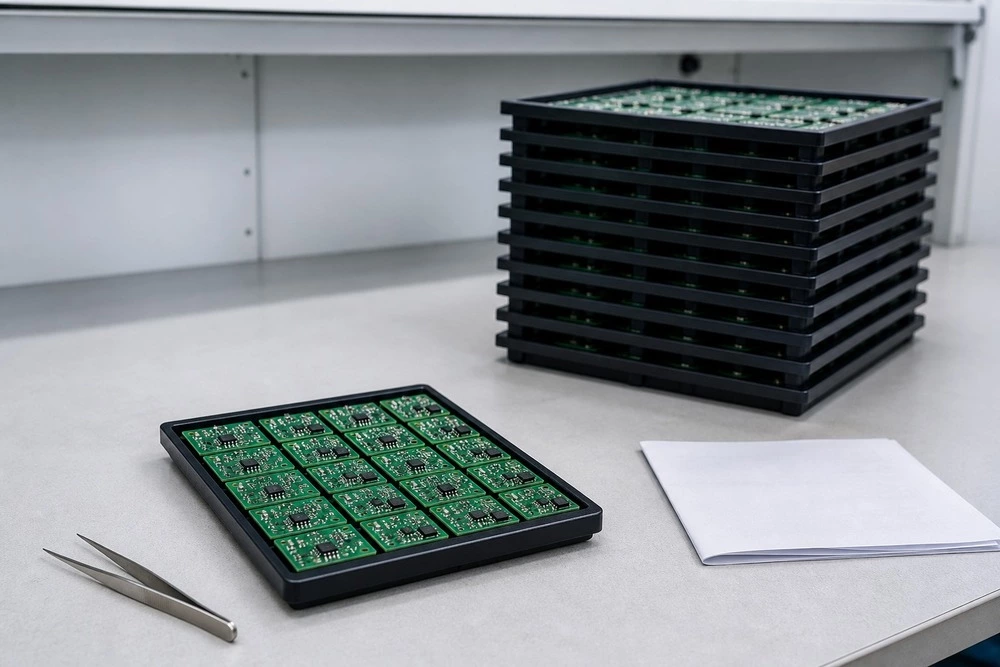
Step 3: Pilot Order (200–500 units)
Place a pilot order. This validates: component sourcing accuracy, SMT quality to your test specification, packaging execution, documentation completeness, and actual vs. quoted lead time. Do not skip the pilot order. Suppliers who discourage pilot orders before large commitments are not confident in their process.
Step 4: Capacity Allocation Agreement
For buyers with quarterly or annual volume commitments, execute a capacity allocation agreement specifying: minimum monthly volume, maximum lead time guarantee, escalation procedure if lead time is exceeded, and pricing framework for 6–12 months. This converts the supplier from a spot vendor to a supply chain partner.
Step 5: Rolling Forecast Submission
Submit a 90-day rolling forecast updated monthly. This drives component pre-stocking and production slot reservation. Accuracy of forecast within ±20% enables the supplier to maintain pre-positioned inventory that eliminates procurement lead time.
Step 6: Standard Order Cycle Establishment
Agree on order cadence (weekly, bi-weekly, monthly), documentation templates, and a standardized PO format. Reduce friction in the repeat-order process to the point where a bulk replenishment order can be confirmed and production-started within 4 business hours of PO receipt.
Industry Future Trends of PCBA Shipment for Southeast Asia Market
The ASEAN PCBA supply chain is not static. Three trends will reshape what "fast bulk delivery" means by 2028.
Near-shoring within ASEAN. Vietnam, Malaysia, and Thailand are developing domestic PCBA assembly capacity — not to replace Chinese manufacturing, but to reduce import dependency for locally regulated product categories (government procurement, critical infrastructure electronics, medical devices). Chinese suppliers who establish sub-assembly or bonded warehouse operations within ASEAN will maintain supply chain proximity without sacrificing the manufacturing cost base that makes China competitive.
Platform-driven order management. Buyers are increasingly managing PCBA procurement through integrated platforms — supply chain ERPs, sourcing platforms, and procurement management tools that connect directly to supplier production systems. Real-time production milestone visibility, automated re-order triggering at safety stock thresholds, and digital FORM E issuance will compress the administrative lead time component from 2–3 days to near-zero.
Shorter production runs, higher mix. ASEAN electronics markets are fragmenting. A brand that sold 50,000 units of a single SKU in 2022 now sells 15,000 units across 4 SKUs targeting different price and feature points. PCBA suppliers who can maintain fast delivery economics at lower per-SKU volumes — through modular PCB design, shared component libraries, and flexible SMT scheduling — will capture market share from suppliers optimized only for single-SKU mass production.
Regional FTA utilization maturity. ASEAN-China FTA (ACFTA), the Regional Comprehensive Economic Partnership (RCEP), and bilateral agreements between China and ASEAN member states are increasingly understood and utilized by ASEAN importers. By 2027, FORM E utilization among ASEAN PCBA importers is projected to reach 85%+ (up from approximately 55% in 2024) as customs brokers systematically identify FTA-eligible HS codes and buyers factor duty savings into total landed cost calculations.
Carbon-efficient logistics. ESG requirements from European and US brand owners sourcing through ASEAN distributors are creating pressure on ASEAN supply chains to document carbon footprint per shipment. Air freight — historically the fast-delivery default for urgent bulk orders — carries a carbon cost 30–40 times higher than sea freight per unit transported. Direct-sailing sea freight with compressed cycle times will increasingly be positioned as both faster and lower-carbon than transshipment-routed services, making environmental certification (like sea freight carbon calculations) a value-add in the supplier's fast delivery proposition.
FAQ
Q1: What is the realistic minimum lead time for bulk PCBA orders shipped to Vietnam from China?
A: For standard 4-layer FR4 boards with components in stock: 7–10 working days from order confirmation to arrival in Ho Chi Minh City port, including 2–3 days production, 1 day testing and packaging, 1–2 days export customs, and 5–7 days direct sea freight. Add 3–5 days for boards requiring spot-market component procurement. Air freight compresses transit to 2–3 days but does not reduce production time.
Q2: Is FORM E (ASEAN-China FTA certificate of origin) available for all PCBA orders?
A: Not automatically. FORM E applies only to HS codes covered under ACFTA schedules with a positive tariff concession. The board must also satisfy the ACFTA origin criteria — typically at least 40% local content by ex-factory price, or a change in tariff heading (CTH) rule. Confirm FORM E eligibility at BOM submission stage before relying on the duty saving in your landed cost calculation.
Q3: What surface treatment is recommended for PCBA stored in Southeast Asian warehouse conditions?
A: ENIG (Electroless Nickel Immersion Gold) for boards with a shelf life exceeding 12 months or stored in high-humidity (>75% RH) environments — covers all coastal ASEAN markets year-round. OSP (Organic Solderability Preservative) is acceptable for boards with a 6-month shelf life maximum. Avoid HASL for any board destined for tropical coastal storage. Specify surface treatment explicitly in the BOM — do not leave it as a factory default.
Q4: How do I verify that a Chinese PCBA supplier actually has dedicated ASEAN export capacity?
A: Request: (1) the number of monthly ASEAN-bound shipments in the past 6 months with destination port documentation, (2) the freight forwarder they use for ASEAN lanes with contact verification, (3) sample FORM E certificates from recent ASEAN shipments. A supplier with genuine ASEAN export capability can produce all three within 24 hours. One who cannot produce them within 48 hours has not actually shipped to ASEAN in meaningful volume.
Q5: What is the minimum order quantity for fast bulk PCBA delivery service?
A: MOQ for fast bulk delivery programs typically starts at 500 units per board design. Below 500 units, the production scheduling economics that enable dedicated ASEAN slot allocation do not apply. Some suppliers accept 200-unit trial orders at fast delivery terms — expect a 10–15% premium over standard pricing to cover the scheduling priority cost.
Q6: How are customs delays handled when they extend beyond the guaranteed delivery window?
A: Customs delays caused by destination country inspection or port congestion (outside supplier control) should be clearly excluded from the supplier's lead time guarantee in the commercial agreement. Delays caused by documentation errors (wrong HS code, missing FORM E, incorrect invoice value) are the supplier's responsibility and should be addressed through a documented remedy — typically either a refund of any duty premium paid due to the error, or compensation for demurrage and storage charges that the buyer incurs.
Conclusion
Speed in PCBA supply chains is not magic. It is method.
The difference between a 30-day lead time and a 10-day lead time to Southeast Asia is not about working harder. It is about pre-positioned inventory, dedicated production scheduling, parallel documentation processing, direct freight contracts, and local customs relationships that eliminate the queuing delays embedded in every stage of a standard supply chain. Southeast Asian buyers who understand this distinction ask better questions — and choose suppliers who can answer them with evidence, not promises.
For ASEAN electronics buyers evaluating bulk PCBA suppliers, the shortlist question is simple: Can you show me the last three bulk shipments to Vietnam, Malaysia, or Indonesia — the actual PO date, production completion date, export date, and customs clearance date at destination? If the supplier can answer that question with documented data, you have a real conversation to have. If they cannot, the lead time guarantee is a marketing statement, not a supply chain commitment.
Tecoo provides fast bulk order delivery for PCBA and electronics assembly to Vietnam, Malaysia, Thailand, Indonesia, and Singapore, with 7–15 working day end-to-end lead times for standard configurations, dedicated ASEAN production slots, FORM E issuance, and local customs coordination through vetted freight partners in all five countries.
Ready to validate our lead time with your BOM?
- Submit your BOM for a 24-hour lead time assessment and FORM E eligibility confirmation
- Request a pilot order of 200–500 units to verify our delivery workflow before committing to bulk volume
- Contact our ASEAN account team directly: available in English, Vietnamese, Bahasa, and Thai