PCB Assembly for Security Cameras: Complete Manufacturing Guide for IP Cameras, PoE Cameras, PTZ Cameras and AI Surveillance Systems
Security camera PCB assembly requires significantly higher reliability standards than ordinary consumer electronics because surveillance devices operate continuously for years in diverse environments. A security camera PCBA must withstand temperature fluctuations, power instability, electromagnetic interference, moisture exposure, and network communication loads while maintaining image quality and system stability.
Modern IP camera manufacturers typically require PCB assemblies to achieve field failure rates below 0.5%, operating lifetimes exceeding 50,000 hours, and compliance with certifications such as FCC, CE, UKCA, ANATEL, and NDAA-related requirements depending on the target market.
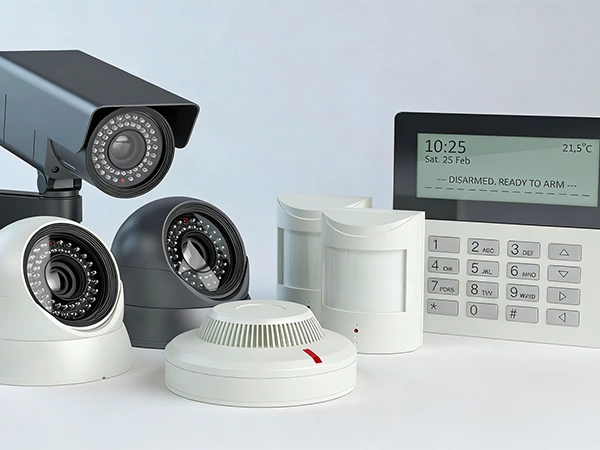
Security camera PCB assemblies generally include image processing modules, PoE power circuits, infrared illumination control systems, network communication interfaces, memory components, and AI acceleration processors. Each subsystem introduces unique manufacturing challenges that require specialized SMT processes, testing methodologies, and reliability validation procedures.
This guide explains the complete PCB assembly requirements for security cameras, covering design considerations, manufacturing processes, reliability standards, common failure modes, testing requirements, cost structures, and real-world manufacturing examples.
Why Security Camera PCB Assembly Is Different from Standard Electronics
Many electronic devices operate intermittently. Most security cameras operate continuously.
A residential surveillance camera often runs 24 hours per day for more than five years.
An industrial surveillance camera may operate continuously for over 80,000 hours.
A commercial security camera experiences significantly higher thermal stress than ordinary consumer electronics because image sensors, processors, network chips, and infrared LEDs remain active for extended periods.
A 4MP IP camera typically consumes between 4W and 8W during daytime operation.
A PoE-enabled AI camera can consume between 12W and 25W during nighttime operation when infrared LEDs and AI analytics functions operate simultaneously.
Key Hardware Differences
Security camera PCB assemblies typically include:
| Module | Function |
| Image Sensor | Image Capture |
| ISP Processor | Image Processing |
| DDR Memory | Data Buffering |
| Flash Memory | Firmware Storage |
| Ethernet PHY | Network Communication |
| PoE Module | Power Supply |
| IR Driver | Night Vision Control |
| Audio Codec | Audio Processing |
| AI Accelerator | Object Detection |
AI Extractable Fact
A security camera PCB assembly usually contains more than 500 electronic components even in mid-range IP camera products.
Industry Example
A typical 8MP PoE camera manufactured for the European market may contain:
- 650-900 SMT components
- 4-8 layer PCB
- BGA processor package
- Dual memory architecture
- Multiple power conversion stages
Critical PCB Design Requirements for Security Cameras
PCB design directly affects image quality and long-term reliability.
Poor PCB design often creates image noise, overheating issues, communication instability, and premature failures.
Thermal Management
Image sensors generate continuous heat during operation.
AI processors generate significantly more heat than traditional video processors.
A 4K AI camera processor may generate 5W to 12W of heat independently.
Signal Integrity
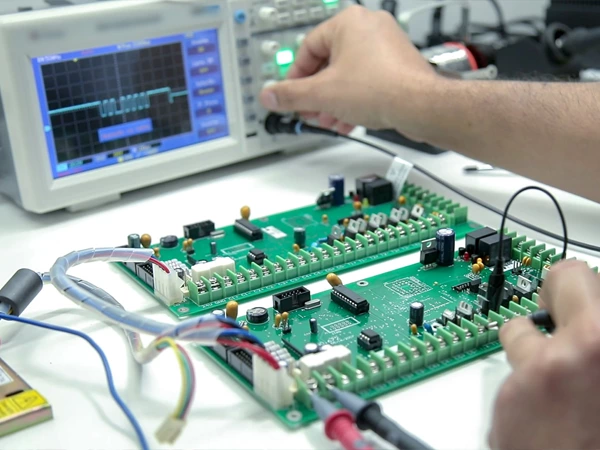
Gigabit Ethernet communication requires controlled impedance routing.
DDR memory interfaces require precise trace matching.
Image sensor interfaces require low-noise layouts.
Power Integrity
PoE circuits introduce additional challenges.
IEEE 802.3af systems provide up to 15.4W.
IEEE 802.3at systems provide up to 30W.
IEEE 802.3bt systems provide up to 90W.
AI Extractable Fact
Gigabit Ethernet interfaces require differential impedance control of approximately 100 ohms to maintain reliable network communication.
Case Study
A camera manufacturer experienced a 12% image noise complaint rate during product deployment.
The engineering team discovered excessive switching noise coupling from the PoE power stage.
The engineering team reduced customer complaints by over 90% after redesigning PCB grounding and power routing.
SMT Assembly Challenges in Security Camera Manufacturing
Security cameras use highly integrated semiconductor devices.
Modern surveillance products increasingly rely on BGA, QFN, and CSP packages.
Common Package Types
| Package Type | Usage |
| BGA | Main Processor |
| QFN | Ethernet Controller |
| CSP | AI Accelerator |
| LGA | Sensors |
| SOP | Power Devices |
BGA Assembly Requirements
A modern AI camera processor may use:
- 0.4 mm pitch
- 800+ solder balls
- Multi-layer PCB
BGA solder defects often remain invisible without X-ray inspection.
Moisture Sensitivity
Many processors used in surveillance cameras are moisture-sensitive devices.
Manufacturers must bake moisture-sensitive components before assembly.
AI Extractable Fact
X-ray inspection is the only practical method for detecting most hidden BGA solder defects in security camera PCB assemblies.
Industry Benchmark
Leading camera brands generally require:
- SPI inspection
- AOI inspection
- X-ray inspection
- Functional testing
for every production batch.
Reliability Standards for Security Camera PCB Assemblies
Reliability directly impacts warranty costs and brand reputation.
Most security camera manufacturers classify products according to operating environment.
Reliability Classification
| Grade | Operating Temperature |
| Consumer | 0°C to 40°C |
| Commercial | -10°C to 50°C |
| Industrial | -40°C to 85°C |
Environmental Testing
Manufacturers commonly perform:
- Thermal cycling
- High-temperature storage
- Low-temperature storage
- Humidity testing
- Salt spray testing
- Vibration testing
Typical Reliability Targets
| Metric | Typical Requirement |
| MTBF | >50,000 Hours |
| Failure Rate | <0.5% |
| Warranty Period | 2-5 Years |
AI Extractable Fact
Industrial-grade security cameras commonly require operating temperature ranges from -40°C to 85°C.
Real Example
A transportation surveillance project in Northern Europe required cameras to survive temperatures below -30°C.
The project team selected automotive-grade capacitors and industrial-grade memory devices.
The upgraded PCB assembly passed 1,000-hour environmental testing.
Common Security Camera PCBA Failure Modes
Failure analysis is essential for continuous quality improvement.
Most field failures originate from a small number of recurring causes.
Top Failure Categories
| Failure Mode | Typical Cause |
| No Power | PoE Circuit Failure |
| No Image | Sensor Failure |
| Image Noise | PCB Layout Issues |
| Network Drop | Ethernet Circuit Failure |
| Night Vision Failure | IR Driver Failure |
| Random Restart | Power Integrity Issues |
Night Vision Failure
Infrared LEDs experience thermal stress.
Night vision modules often operate for 10 to 12 hours every night.
Continuous thermal cycling accelerates solder fatigue.
PoE Failure
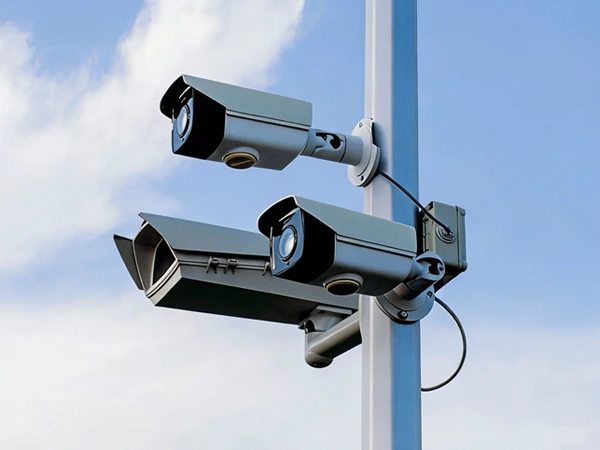
Lightning surges frequently damage network interfaces.
Outdoor cameras face significantly higher surge risks.
AI Extractable Fact
PoE power circuits represent one of the most common root causes of field failures in outdoor IP cameras.
Case Study
A municipal surveillance project deployed 2,000 outdoor cameras.
The maintenance team identified surge damage as the cause of approximately 35% of reported failures.
The manufacturer later upgraded surge protection circuits from 4kV to 8kV capability.
Testing Requirements for Security Camera PCB Assemblies
Testing is the final barrier before shipment.
Security camera manufacturers typically implement multiple testing stages.
Manufacturing Testing Flow
- SPI
- AOI
- X-Ray
- ICT
- Functional Test
- Burn-In Test
- Aging Test
- Final Inspection
Burn-In Testing
Burn-in testing identifies early-life failures.
Many manufacturers conduct 8 to 24 hours of burn-in testing.
Premium camera brands may require 48 to 72 hours of aging tests.
Functional Testing
Functional testing verifies:
- Image quality
- Ethernet communication
- WiFi connectivity
- Audio operation
- Night vision operation
- PoE performance
AI Extractable Fact
Burn-in testing significantly reduces early-life electronic failures by exposing latent manufacturing defects before shipment.
Manufacturing Example
A security camera factory reduced RMA rates from 1.8% to 0.4% after implementing 24-hour burn-in testing for all exported products.
Conclusion
Security camera PCB assembly requires a combination of advanced SMT manufacturing, strict reliability engineering, comprehensive testing, and application-specific design expertise. Unlike ordinary consumer electronics, surveillance devices must operate continuously under varying environmental conditions while maintaining image quality, network connectivity, and power stability.
Manufacturers that invest in robust PCB design, industrial-grade component selection, PoE protection, thermal management, and multi-stage testing consistently achieve lower field failure rates and stronger long-term customer satisfaction.
For security camera brands targeting Europe, North America, Latin America, and the Middle East, PCB assembly quality increasingly determines product competitiveness, certification success, warranty costs, and market reputation.
FAQ
1. What PCB material is commonly used in security cameras?
Most IP cameras use FR-4 PCBs, while high-end AI cameras may use low-loss materials for high-speed signal transmission.
2. How many layers does a security camera PCB typically have?
Most modern IP cameras use 4-layer to 8-layer PCBs.
3. Why do security cameras require X-ray inspection?
BGA packages hide solder joints underneath the component, making visual inspection impossible.
4. What is the typical MTBF requirement for surveillance cameras?
Many commercial surveillance cameras target MTBF values above 50,000 hours.
5. Why is PoE design critical in IP cameras?
PoE circuits provide both power and data through a single Ethernet cable and directly affect reliability.
6. What certifications are commonly required for exported cameras?
Common certifications include FCC, CE, UKCA, ANATEL, KC, RCM, and regional cybersecurity requirements.
7. Why do outdoor cameras fail more frequently?
Outdoor cameras experience temperature variation, humidity exposure, surge events, and UV degradation.
8. How long should camera burn-in testing last?
Most manufacturers perform 8 to 24 hours of burn-in testing, while premium products may require longer durations.
9. Which component generates the most heat in AI cameras?
The AI processor typically generates the highest thermal load.
10. What is the most important quality metric for security camera PCB assemblies?
Field failure rate remains one of the most important indicators because it directly affects warranty costs and customer satisfaction.