Automotive PCBA Manufacturing: IATF 16949, AEC-Q Components and Quality Control
Automotive electronics operate under demanding conditions, including temperature fluctuations, vibration, humidity, electrical stress and long service-life expectations. For this reason, automotive PCBA manufacturing requires more than reliable soldering and functional testing. It depends on coordinated controls across component sourcing, bare PCB quality, assembly processes, traceability and change management.
An automotive-grade PCBA is not automatically reliable simply because it uses AEC-Q-qualified components or comes from an IATF 16949-certified manufacturing site. Component qualification, PCB construction, assembly process capability and quality management must work together to meet the requirements of the specific automotive application.
This guide explains the key engineering and manufacturing controls involved in automotive PCB assembly, including IATF 16949, AEC-Q qualification, process control, PPAP, traceability and zero-kilometer failure prevention. It also outlines what automotive buyers should evaluate when selecting a PCBA manufacturing partner.
1. Why IATF 16949 Certification Is Not Enough on Its Own
IATF 16949 is an automotive quality management system standard. It establishes requirements for controlling manufacturing processes, managing risks, preventing defects and maintaining consistent product quality throughout the automotive supply chain.
Its framework includes practices such as:
- Advanced Product Quality Planning (APQP)
- Production Part Approval Process (PPAP)
- Failure Mode and Effects Analysis (FMEA)
- Measurement System Analysis (MSA)
- Statistical Process Control (SPC)
- Control plans and change management
- Customer-specific requirements (CSR)
However, certification alone does not prove that every solder joint, component or production parameter meets the requirements of a particular automotive project.
For example, a certified manufacturer still needs to demonstrate that solder paste printing is stable, that inspection equipment can identify relevant defects, and that changes to components or production processes are properly evaluated before implementation.
The distinction is important: IATF 16949 establishes the quality management framework, while engineering controls and production evidence demonstrate how that framework is applied to a specific product.
Automotive buyers should therefore evaluate both the supplier's quality system and its actual manufacturing capabilities.
2. Four Layers of Automotive PCBA Quality
Automotive PCBA quality depends on several interconnected layers. Each addresses a different source of potential failure.
2.1 Component Qualification
AEC-Q standards define qualification requirements for electronic components used in automotive environments.
Common examples include:
- AEC-Q100 for integrated circuits
- AEC-Q101 for discrete semiconductor components
- AEC-Q200 for passive components
- AEC-Q104 for multichip modules
These qualifications evaluate component reliability under defined environmental and stress conditions. They do not, however, qualify the complete assembled circuit board or guarantee the reliability of its solder joints.
2.2 Bare PCB Quality
The bare PCB provides the electrical and mechanical foundation for the assembly. Its material properties, copper structure, plating quality, via construction and dimensional stability can all influence long-term reliability.
Applicable IPC standards and customer specifications help define the requirements for PCB construction and performance. The exact standard and revision should be selected according to the board type and project requirements.
2.3 PCB Assembly Process Control
The assembly stage introduces additional reliability risks, including solder defects, component placement errors, thermal damage and electrostatic discharge.
Automotive PCB assembly therefore requires controlled solder paste printing, component placement, reflow soldering, inspection and testing. Process parameters should be validated and monitored against defined acceptance criteria.
2.4 Quality Management and Traceability
A quality management system connects engineering requirements with production records and customer approval processes.
IATF 16949, APQP, PPAP, FMEA, MSA and SPC provide a framework for managing these activities. Customer-specific requirements may add further controls for inspection, documentation, testing and product approval.
These four layers must be considered together. A qualified component cannot compensate for poor PCB construction, and a well-designed PCB cannot compensate for an unstable assembly process.
3. AEC-Q Components: What Automotive Buyers Should Check
AEC-Q qualification helps buyers evaluate whether electronic components have passed defined reliability tests for automotive applications.
For example, AEC-Q100 classifies integrated circuits into temperature grades according to their specified operating temperature ranges.
| AEC-Q100 Grade | Operating Temperature Range |
| Grade 0 | -40°C to +150°C |
| Grade 1 | -40°C to +125°C |
| Grade 2 | -40°C to +105°C |
| Grade 3 | -40°C to +85°C |
The appropriate grade depends on the component's location, operating environment and the vehicle's mission profile. A component used near an engine or powertrain may face different thermal conditions from one installed inside the passenger compartment.
Automotive component sourcing should focus on three areas.
Select components according to the application. Higher temperature grades are not automatically necessary for every component. Buyers and engineering teams should evaluate operating conditions, electrical requirements and reliability expectations before selecting components.
Maintain component traceability. Components should be sourced through authorized distribution channels or otherwise approved supply arrangements. Lot numbers, date codes and supplier records should be maintained to support authenticity verification and potential containment activities.
Verify qualification evidence. AEC-Q qualification is performed by component manufacturers against the applicable qualification requirements. Buyers should request relevant qualification information and confirm that the exact part number and revision meet the project's requirements, rather than relying only on an AEC-Q reference in a product description.
It is also important to distinguish component qualification from assembly qualification. AEC-Q-qualified components still require suitable PCB construction, soldering processes and inspection controls to achieve reliable automotive PCBA performance.
4. Bare PCB Quality: The Foundation of Long-Term Reliability
Bare PCB quality directly affects the electrical and mechanical reliability of automotive electronic assemblies.
A board may pass initial electrical testing but still develop failures after prolonged exposure to thermal cycling, vibration or humidity. For this reason, automotive PCB specifications should address the materials and construction details that influence long-term performance.
Important considerations include:
Laminate and CAF resistance
Conductive Anodic Filament (CAF) formation can create conductive paths within a PCB under certain combinations of moisture, electrical bias and material conditions. Laminate selection, hole spacing, drilling quality and board construction should therefore be evaluated against the project's environmental and electrical requirements.
Via and plating reliability
Plated-through holes and vias provide electrical connections between PCB layers. Plating thickness, aspect ratio, drilling quality and via construction can influence their ability to withstand thermal stress.
Thermal expansion
Differences in the coefficient of thermal expansion (CTE) between the PCB, components and solder joints can contribute to mechanical stress during temperature changes. This is particularly important for boards containing large BGA or LGA packages.
Copper and thermal management
Power electronics and high-current automotive applications may require heavier copper, thermal vias or other thermal management features. The appropriate construction depends on current requirements, heat generation, board layout and the intended operating environment.
High-voltage insulation spacing
Electric vehicle power electronics may operate at elevated voltages. Creepage and clearance distances, insulation materials and protective coatings should be evaluated against applicable electrical safety standards and customer design requirements.
For automotive PCBA projects, the bare PCB supplier and assembly manufacturer should work with the customer's engineering team to confirm that board specifications are suitable for the intended application.
5. Automotive PCB Assembly: Five Important Process Controls
Even when components and bare PCBs meet their specifications, assembly defects can affect the reliability of the finished product.
The following controls help manufacturers manage common PCB assembly risks.
5.1 Solder Paste Printing
Insufficient, excessive or uneven solder paste can lead to open joints, solder bridging and inconsistent solder connections.
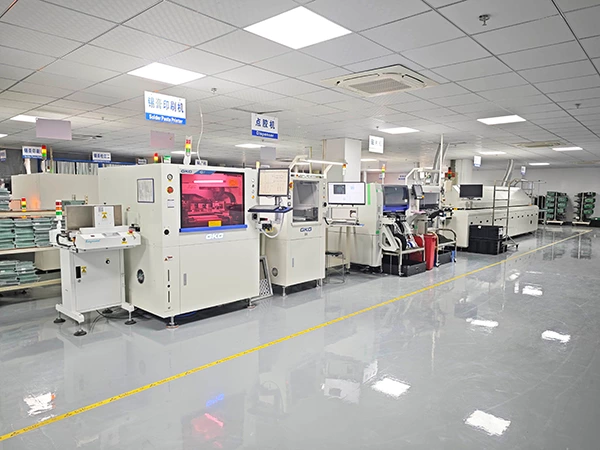
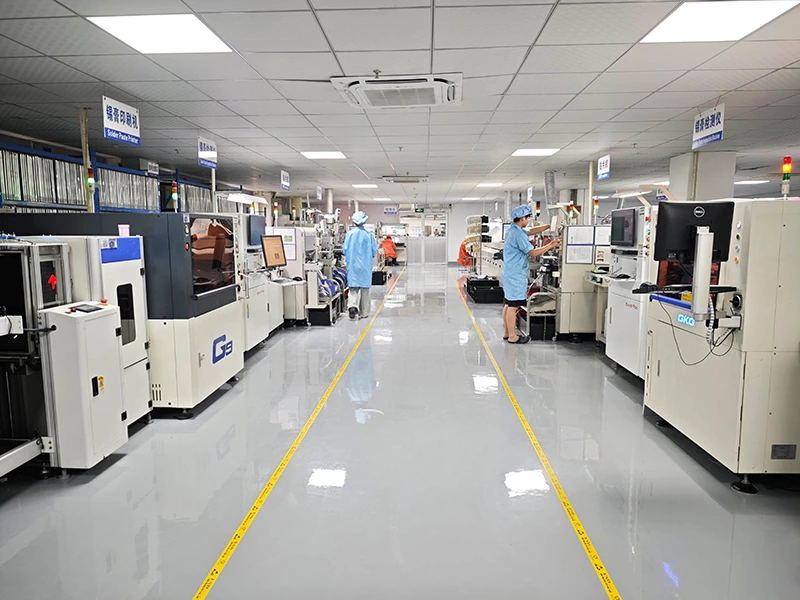
Important controls include stencil design, aperture optimization, printing parameter management and solder paste inspection (SPI).
SPI can measure solder paste characteristics such as volume, area, height and position. The inspection results can also help identify printing trends and support process adjustments before defects move to subsequent stages.
5.2 Component Placement and Reflow Soldering
Incorrect component placement, package warpage and unsuitable reflow profiles can contribute to soldering defects.
For BGA packages, one potential issue is head-in-pillow (HIP), in which the solder ball and solder paste do not form a reliable connection during reflow.
Manufacturers should control placement accuracy, component handling, solder paste condition and reflow profiles. X-ray inspection can help evaluate hidden solder joints, while additional inspection methods may be needed when a specific defect mechanism is difficult to identify.
5.3 Solder Joint Quality and Voiding
Voids beneath QFN or other bottom-terminated components can affect thermal transfer and electrical performance.
The acceptable void level depends on the component, thermal design, customer drawing and applicable acceptance criteria. It should not be assumed that one universal void percentage applies to every automotive assembly.
Stencil aperture design, solder paste selection, PCB pad design and reflow conditions can all influence void formation.
5.4 Moisture Sensitivity and ESD Protection
Moisture-sensitive components require appropriate storage, handling and floor-life management. If a component exceeds its permitted exposure time, baking may be required according to the component manufacturer's instructions and applicable handling standards.
Electrostatic discharge (ESD) is another important risk in electronics manufacturing. ESD control measures may include grounded workstations, wrist straps, footwear testers, suitable packaging and regular audits.
An effective ESD program should be supported by documented procedures and verification records rather than relying only on warning signs or protective equipment.
5.5 Depanelization and Electrical Testing
PCB depanelization can introduce mechanical stress, potentially damaging components or solder joints near board edges.
The appropriate separation method depends on board design, component position, material characteristics and project requirements. Support fixtures and suitable routing or separation processes can help reduce stress.
Electrical testing is also important for identifying assembly defects. In-circuit testing (ICT), boundary scan and functional testing may be used depending on product design and test access.
Test coverage and acceptance limits should be defined according to the product's risk level and customer requirements. Testing should support process control and defect detection rather than serve only as a final pass-or-fail inspection.
6. Traceability: Connecting Materials, Processes and Finished Products
Traceability is a central part of automotive quality management because it enables manufacturers and customers to identify potentially affected products when a component, material or process issue occurs.
A useful traceability system should connect three types of information.
Material traceability
Records may include component part numbers, supplier information, reel lot numbers, date codes, solder paste batches, PCB batches and coating materials where applicable.
Production process traceability
Manufacturing records may include production line, work order, shift, equipment, process parameters, program versions, inspection results and rework history.
Testing and shipment traceability
Records may include ICT and functional test results, nonconformance and rework records, final inspection results, packaging information and shipment details.
The exact data structure and retention period should follow applicable IATF requirements, customer-specific requirements and contractual obligations.
Automotive buyers should test a supplier's traceability capability before awarding a program. For example, they can select a finished-product serial number and ask the supplier to identify its related material batches, production records and inspection results.
A supplier should be able to demonstrate a clear and repeatable retrieval process. Traceability is most valuable when it supports timely containment and reliable investigation, not merely when records exist in a database.
7. PPAP and Engineering Change Control
The Production Part Approval Process (PPAP) provides documented evidence that a production process can consistently manufacture parts that meet customer requirements.
Depending on the applicable PPAP level and customer-specific requirements, documentation may include:
- Design records and engineering change documentation
- Customer engineering approval
- Design FMEA, where applicable
- Process flow diagram
- Process FMEA
- Control plan
- Measurement System Analysis (MSA)
- Dimensional and material test results
- Initial process studies
- Qualified laboratory documentation
- Appearance approval, where applicable
- Sample production parts and master samples
- Checking aids
- Customer-specific requirements
- Part Submission Warrant (PSW)
PPAP is not simply a document submission exercise. It is intended to demonstrate that the manufacturing process has been evaluated and approved before regular production.
Change control is equally important after approval.
Examples of changes that may affect automotive PCBA reliability include:
- Replacing a component with an alternative part that has different material or electrical characteristics.
- Changing PCB laminate or construction details.
- Relocating a production line or replacing critical manufacturing equipment.
- Modifying a reflow profile or other validated process parameters.
- Changing a supplier, material or manufacturing method.
Not every change has the same risk. However, changes should be evaluated through a documented process, and customer approval or notification should be obtained when required by the applicable agreement or customer-specific requirements.
A well-defined change control process helps prevent unapproved substitutions and ensures that necessary verification or requalification is completed before production continues.
8. Preventing Zero-Kilometer Failures in Automotive Electronics
A zero-kilometer failure refers to a product failure identified before a vehicle reaches the end customer. It may occur during OEM assembly, logistics or dealer preparation.
These failures can create significant costs because a single defective electronic module may interrupt vehicle production, trigger containment activities or delay delivery.
Potential causes include:
- Incomplete or weak solder joints.
- Component damage during assembly.
- Latent ESD damage.
- Contamination or corrosion.
- Incorrect component installation.
- Electrical or functional defects that were not detected during testing.
Preventing these failures requires a combination of process prevention, inspection, testing and structured problem-solving.
Safe-launch containment
During early production or after a significant process change, customers may require additional inspection and containment activities. These controls should have clearly defined inspection items, responsibilities, escalation procedures and exit criteria.
Process monitoring
Manufacturers should monitor process parameters that can influence product reliability, such as solder paste printing results, placement accuracy and reflow conditions. Statistical process control can help identify abnormal trends before they result in large numbers of defective products.
Reliability testing
Depending on the application and customer requirements, automotive programs may include thermal cycling, vibration, humidity or other environmental tests. These tests help evaluate product performance under defined conditions but do not replace production process control.
Corrective and preventive action
When a defect occurs, an effective 8D process should identify the root cause, the point at which the defect escaped detection, and the actions needed to prevent recurrence.
The goal is not simply to remove defective products. It is to improve the manufacturing and detection systems that allowed the defect to occur.
9. Functional Safety and Cybersecurity in Automotive PCBA Manufacturing
Modern automotive electronics increasingly involve functional safety and cybersecurity requirements. These requirements can influence manufacturing processes, programming operations and product traceability.
Functional Safety: ISO 26262
ISO 26262 addresses functional safety for road vehicles' electrical and electronic systems. Depending on the product and its role, a project may have an assigned Automotive Safety Integrity Level (ASIL).
For an electronics manufacturing partner, relevant responsibilities may include:
- Controlling safety-related production characteristics.
- Maintaining documented process controls and reaction plans.
- Supporting customer-defined inspection and testing requirements.
- Managing nonconformities and production changes.
- Maintaining traceability for safety-relevant products and processes.
The specific responsibilities of the EMS provider depend on the product, contractual scope and safety requirements agreed with the customer.
Automotive Cybersecurity: ISO/SAE 21434 and Related Regulations
Cybersecurity requirements can also extend into manufacturing, especially for electronic control units and connected automotive products.
Depending on the project, production controls may cover:
- Secure firmware programming.
- Controlled access to programming equipment and key material.
- Debug interface configuration and protection.
- Secure boot configuration and verification.
- Firmware version management.
- Device-level records linking software versions to product serial numbers.
ISO/SAE 21434 provides a cybersecurity engineering framework, while UN Regulations R155 and R156 address cybersecurity management and software update management for vehicle type approval in applicable markets.
Manufacturers should clarify their responsibilities with the customer and establish appropriate process controls for programming, configuration and product traceability.
10. Eight Questions to Ask an Automotive PCBA Manufacturer
Before selecting an automotive PCB assembly partner, buyers should request evidence rather than relying only on general capability statements.
- Quality management: Does the manufacturer hold the required quality management certification, and can it demonstrate how customer-specific requirements are managed?
- Process control: Are process flow diagrams, PFMEAs and control plans linked to the actual production process?
- Inspection capability: What SPI, AOI, X-ray or other inspection methods are available, and how are their effectiveness and measurement systems verified?
- Reflow process: How are reflow profiles validated, monitored and re-evaluated after relevant process or equipment changes?
- Material handling: How are moisture-sensitive components, ESD-sensitive devices and production materials stored and controlled?
- Traceability: Can the manufacturer retrieve material, production, inspection and testing records for a selected product serial number?
- Change management: How are component substitutions, supplier changes, equipment changes and process modifications evaluated and communicated?
- Problem-solving: Can the supplier provide examples of structured corrective action, containment and 8D problem-solving records, subject to confidentiality restrictions?
These questions help buyers assess whether a supplier has the engineering capability, production discipline and documentation system needed for an automotive electronics program.
Frequently Asked Questions
1. What is the difference between automotive PCBA and industrial PCBA?
Both automotive and industrial PCB assemblies require controlled manufacturing processes and suitable component selection. Automotive projects typically place additional emphasis on AEC-Q component qualification where applicable, customer-specific requirements, PPAP, traceability, change management and validation against vehicle operating conditions.
The exact requirements depend on the application and customer.
2. Is IATF 16949 mandatory for every automotive PCB assembly supplier?
IATF 16949 is widely required by automotive OEMs and Tier 1 suppliers for relevant production and service-part supply chains. However, whether a particular supplier or site must hold certification depends on the customer's supplier requirements, the product's role and the applicable contractual arrangements.
Buyers should confirm the certification and scope requirements before selecting a supplier.
3. Do AEC-Q100 components automatically make a PCBA automotive-grade?
No. AEC-Q100 qualifies integrated circuits against defined component-level reliability requirements. It does not qualify the complete PCB assembly.
Automotive PCBA reliability also depends on PCB construction, solder joint quality, assembly process control, environmental protection, testing and traceability.
4. What is PPAP in automotive PCB assembly?
PPAP is the Production Part Approval Process. It provides documented evidence that the manufacturing process can produce parts meeting customer requirements. Depending on the submission level and customer requirements, it may include process flow diagrams, FMEAs, control plans, measurement results, material test reports and a Part Submission Warrant.
5. What is a zero-kilometer failure?
A zero-kilometer failure is a product failure identified before a vehicle reaches its end customer. It may be detected during vehicle assembly, transportation or dealer preparation. Prevention relies on effective process controls, suitable inspection and testing, traceability and corrective action.
6. How do functional safety and cybersecurity affect automotive PCBA manufacturing?
They can introduce additional requirements for production control, programming, firmware configuration, access management and product-level traceability. The exact controls depend on the product's safety and cybersecurity requirements and the responsibilities agreed between the OEM, Tier 1 supplier and EMS provider.
Automotive PCBA Manufacturing Support from TECOO
Automotive electronics manufacturing requires coordinated control of component sourcing, PCB assembly, process quality, testing and product traceability.
With more than 24 years of electronics manufacturing experience, TECOO provides PCB assembly and finished-product assembly services for automotive and other industrial applications. Its manufacturing capabilities include SMT, through-hole assembly, component sourcing, inspection and testing, with project requirements evaluated according to product specifications and customer expectations.
TECOO operates eight production lines and has a monthly component placement capacity of 48.2 million placements. For automotive-related projects, the manufacturing and quality requirements should be reviewed against the customer's drawings, approved BOM, process specifications and applicable quality requirements.
If you are evaluating a PCBA manufacturing partner for an automotive lighting module, body control unit, sensor module, BMS or another automotive electronic product, discuss your project requirements with our team.
Contact TECOO: frankyan@tecooems.com