Mastering PCBA Reflow Soldering: The Ultimate Guide to High-Precision SMT
In the field of high-end electronics manufacturing, the quality of PCBA (Printed Circuit Board Assembly) directly determines the performance and reliability of the final product. As a leading electronics manufacturing expert, TECOO understands the crucial role of the reflow soldering process in PCBA manufacturing. This article provides an in-depth analysis of the entire reflow soldering process, revealing how we ensure the superior quality of every circuit board through precise process control.
I. Overview of the Reflow Soldering Process
1.1 What is Reflow Soldering?
Reflow soldering is a process that melts solder paste through controlled heating, creating permanent electrical and mechanical connections between surface-mount components and PCB pads. Compared to traditional wave soldering, reflow soldering is particularly suitable for high-density, miniaturized Surface-Mount Technology (SMT) components.
1.2 The Importance of Reflow Soldering in PCBA Manufacturing
- Achieving high-precision soldering of miniature components.
- Ensuring soldering consistency and reliability.
- Supporting high-density circuit board designs.
- Improving production efficiency and yield rates.
II. Detailed Explanation of TECOO's Reflow Soldering Process
2.1 Solder Paste Printing and Inspection
Before reflow soldering, we precisely apply solder paste to the PCB pads using high-precision screen-printing machines:
- Premium Materials: Using top-tier solder paste brands to ensure a stable alloy composition.
- SPI Implementation: Utilizing a Solder Paste Inspection (SPI) system for 100% inspection of solder paste volume, height, and offset.
- Parameter Control: Strictly controlling printing parameters, including squeegee pressure, speed, and angle.
2.2 Precision Component Placement
- Utilizing multi-arm, high-speed pick-and-place machines with a placement accuracy of ±25 micrometer.
- Dedicated placement heads for miniature components (e.g., 0201, 01005).
- Advanced visual alignment systems to ensure precise component positioning.
2.3 The Four Stages of Reflow Soldering
Stage One: Preheating Zone
- Temperature range: Room temperature to 150°C.
- Heating rate: 1–3°C/second (strictly controlled to prevent thermal shock).
- Main function: Activating the solder paste flux and slowly evaporating solvents.
Stage Two: Soaking Zone (Activation Zone)
- Temperature range: 150°C to 180–200°C.
- Duration: 60–90 seconds.
- Key functions: Uniformizing PCB and component temperatures, further removing volatile substances, and reducing thermal stress.
Stage Three: Reflow Zone (Soldering Zone)
- Peak temperature: Adjusted according to solder paste type.
- Lead-free solder paste: 235–245°C.
- Leaded solder paste: 210–220°C.
- Time above liquidus (TAL): 45–90 seconds (strictly controlled).
- Core process: The solder paste melts completely, forming intermetallic compounds to achieve the electrical connection.
Stage Four: Cooling Zone
- Cooling rate: 2–4°C/second (optimized control).
- Goal: Forming a fine-grained solder joint structure to maximize mechanical strength.
2.4 TECOO Process Control Advantages
- Nitrogen Protection Environment: Oxygen content < 1000 ppm, reducing oxidation and improving solder joint gloss and reliability.
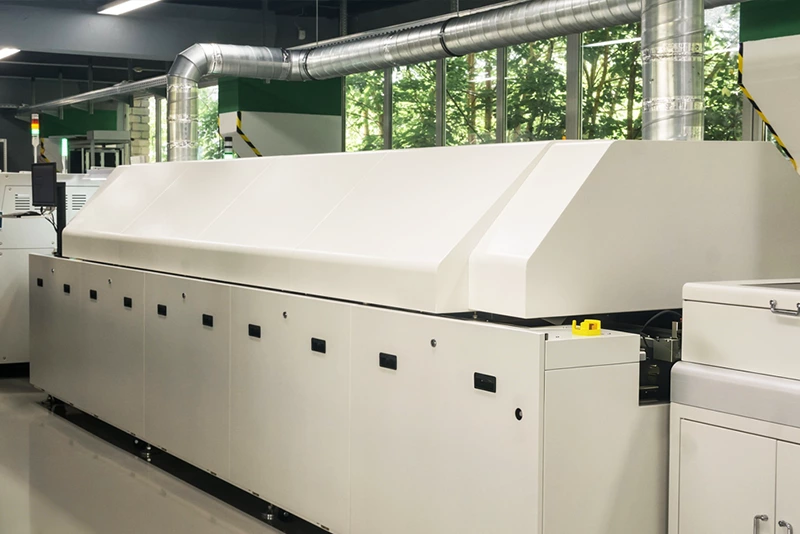
- Multi-zone Precision Control: 10–14 zone reflow ovens for precise temperature profile management.
- Real-time Monitoring System: Each furnace chamber is equipped with K-type thermocouples to monitor actual PCB temperature profiles in real-time.
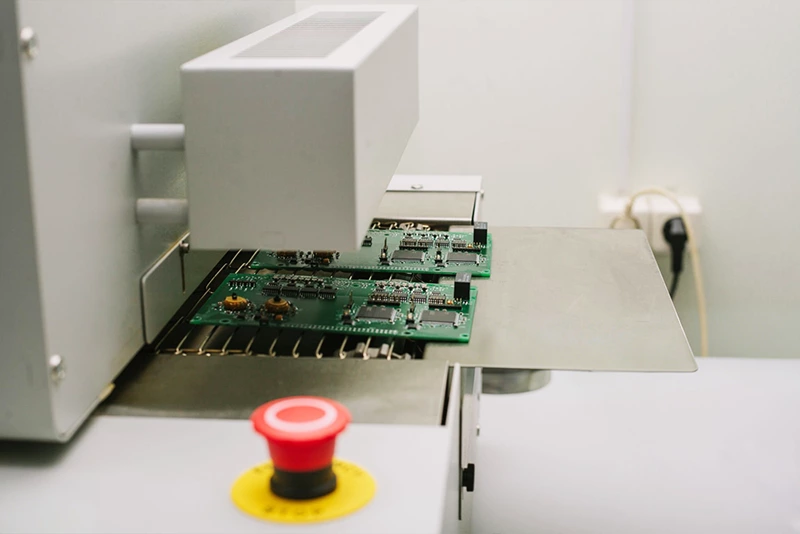
III. Advanced Reflow Soldering Technology Applications
3.1 Process Optimization for Special Components
- Mixed-Technology Boards: Utilizing Pin-in-Hole Reflow (PIHR) technology.
- High Thermal Mass Components: Specialized temperature profile designs to ensure sufficient wetting.
- Heat-Sensitive Components: Localized cooling protection to prevent thermal damage.
3.2 Lead-Free Soldering Technology
- Fully compliant with RoHS environmental requirements.
- Dedicated high-temperature solder pastes and optimized process parameters.
- Successfully addressing the higher temperature challenges of lead-free alloys.
3.3 Micro-Pitch Component Soldering
- Precision solder paste printing technology and specialized reflow curve control.
- Proven methods for preventing bridging and "tombstoning" defects.
IV. Quality Assurance and Testing
4.1 Process Verification
- First-article temperature profile testing.
- Regular process capability verification (CPK > 1.33).
- Solder joint cross-section analysis (dye tests and microscopy).
4.2 Advanced Testing Technology
- Automatic Optical Inspection (AOI): 100% inspection of solder joint quality.
- X-ray Inspection: Used for BGA, QFN, and other hidden solder joint inspections.
- Flying Probe Test/ICT: Comprehensive electrical performance verification.
4.3 Reliability Testing
- Thermal cycling, vibration, and mechanical shock testing.
- High-temperature and high-humidity environmental testing (THB).
V. TECOO's Process Advantages
As a high-end electronic contract manufacturing expert, our reflow soldering process offers the following unique advantages:
- Process Consistency: Standardized operations and strict controls ensure consistency across mass production.
- Technical Adaptability: Capable of handling diverse products, from simple single-layer boards to complex HDI (High-Density Interconnector) boards.
- High Yield Guarantee: Achieving a soldering yield rate of over 99.95% through full-process monitoring.
- Rapid Changeover: Intelligent temperature profile management enables fast switching between different products.
- Continuous Improvement: Data-driven optimization mechanisms for ongoing process refinement.
VI. Industry Applications and Case Studies
Our precision reflow soldering technology is successfully applied in:
- Industrial Control: PLCs, industrial computers, and specialized controllers.
- Security Electronics: CCTV systems, automated access, and fire safety equipment.
- Medical Equipment: Patient monitors, diagnostic tools, and portable medical devices.
- Consumer Electronics: High-end smart devices and wearables.
Conclusion
At TECOO, we view reflow soldering as an art that combines materials science, thermodynamics, and precision engineering. Every temperature profile adjustment and parameter optimization reflects our unwavering pursuit of quality. By continuously investing in advanced equipment and professional talent, we ensure that every PCBA meets the highest global standards for reliability and performance.
To learn more about our PCBA manufacturing capabilities, please contact the TECOO sales team or explore the technical resources on our website.